From Slave Pulpits to MAGA Fundamentalist Power: How the Southern Church Schisms And Apostasy Still Shapes American Christianity
- Don Hilborn
- Mar 30
- 5 min read

Updated: Apr 6
Most major Protestant denominations with a strong presence in the American South fractured in the 1840s–1860s over slavery, primarily along North–South lines. The splits were not incidental—they were institutional, theological, and deeply tied to political economy.
Below is a structured breakdown of the key denominations.
I. The Major Denominations That Split Over Slavery
1. Baptist Churches → Southern Baptist Convention (1845)

Split year: 1845
Cause: Whether slaveholders could serve as missionaries
Result:
Northern Baptists → eventually became the American Baptist Churches USA
Southern faction → formed the Southern Baptist Convention

Key insight:This was one of the clearest institutional defenses of slavery. Southern Baptists explicitly justified slavery as compatible with Christianity.
2. Methodist Episcopal Church → Methodist Episcopal Church, South (1844)

Split year: 1844
Trigger: A bishop (James O. Andrew) who owned slaves
Result:
Northern branch → Methodist Episcopal Church
Southern branch → Methodist Episcopal Church, South

Key insight:Methodists were the largest Protestant group in America at the time, so this split had enormous cultural impact.
3. Presbyterian Church → Old School / New School splits + North/South divide
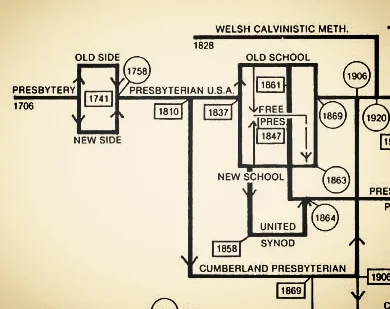
Initial split: 1837 (Old School vs. New School—partly theological, partly sectional)
Full North/South divide: 1861 (Civil War onset)
Result:
Northern → Presbyterian Church in the U.S.A.
Southern → Presbyterian Church in the Confederate States of America (later PCUS)

Key insight:Presbyterians were slower to split, but once they did, the division aligned cleanly with the Confederacy.
4. Episcopal Church → Did NOT formally split (but functionally divided)
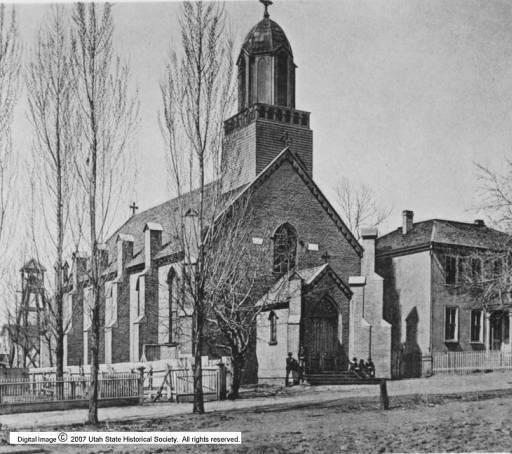
Formal unity maintained, but:
Southern dioceses aligned with the Confederacy
Created a parallel structure during the war
Northern body: Episcopal Church (United States)
Key insight:Unlike Baptists and Methodists, Episcopalians prioritized institutional continuity—but still mirrored sectional loyalties.
II. Theological Fault Line (What Was Actually Being Debated)
At the core, the dispute was not just political—it was hermeneutical (how to read the Bible):
Southern Argument
Slavery is explicitly permitted in Scripture (e.g., Pauline epistles)
Therefore: morally acceptable if practiced “properly”
Northern Argument
Christianity’s moral trajectory (love, equality) condemns slavery
Emphasis on natural rights and abolition
III. Structural Insight
From a systems perspective, these splits reveal something deeper:
1. Institutions Follow Incentives
Church governance aligned with:
Southern agrarian slave economy
Northern industrial/free labor economy
👉 Theology did not operate independently—it tracked economic structure.
2. Distributed Authority → Fragmentation
Protestantism lacks a central authority (unlike Catholicism), so:
Disputes → institutional schism rather than internal adjudication
3. Moral Claims vs. Power Preservation
Using a Rawlsian lens:
If leaders operated behind a veil of ignorance, slavery would fail immediately
The persistence of pro-slavery theology suggests self-interest constrained moral reasoning
IV. Aftermath (Reunification and Legacy)
Methodists reunited in 1939
Presbyterians gradually reunited in the 20th century
Baptists never fully reunited (the Southern Baptist Convention still exists separately)
Bottom Line
The major Southern-linked Protestant splits over slavery were:
Baptists → Southern Baptist Convention (1845)
Methodists → Methodist Episcopal Church, South (1844)
Presbyterians → North/South divide (1861)
Episcopalians → informal wartime division
You can’t claim to be a follower of Christ and ignore the Word He has given you to ensure you are following him.
“Beloved, do not believe every spirit, but test the spirits to see whether they are from God, for many false prophets have gone out into the world.”
— 1 John 4:1
The apostles were explicit:
Acts 5:29: “But Peter the Apostle and the apostles answered, ‘We must obey God rather than men.’”
If a Christian believes Scripture is authoritative, then God’s commands cannot be subordinated to political ideology, national identity, or cultural tradition.
Jesus warned that religious people frequently do exactly this—elevating human traditions above God’s commands:
Mark 7:8–9: “You leave the commandment of God and hold to the tradition of men…
You have a fine way of rejecting the commandment of God in order to establish your tradition.”
One of the clearest commands God gives throughout the Bible concerns how His people must treat foreigners:
Leviticus 19:34: “The foreigner residing among you must be treated as your native-born. Love them as yourself, for you were foreigners in Egypt. I am the LORD your”
These were not minor disagreements—they were system-level fractures where theology, economics, and political identity converged.
V. Sources
I. Denominational Splits Over Slavery
Baptist Split (1845)
Southern Baptist Convention, Resolution on the Formation of the Southern Baptist Convention (1845), reprinted in SBC Archives, https://www.sbhla.org.
Mark A. Noll, The Civil War as a Theological Crisis 51–58 (Univ. of N.C. Press 2006).
American Baptist Churches USA, Our History, https://www.abc-usa.org.
Supports: missionary dispute, 1845 split, pro-slavery theological justification.
Methodist Split (1844)
United Methodist Church, The Organization of the Methodist Episcopal Church, South (1844), https://www.umc.org.
John H. Wigger, American Methodism: A History 215–230 (Oxford Univ. Press 2012).
Russell E. Richey et al., Methodism in the American Forest 167–175 (Oxford Univ. Press 1990).
Supports: Bishop James O. Andrew controversy, institutional split, scale of Methodist influence.
Presbyterian Split (1837 / 1861)
Presbyterian Church (U.S.A.), Historical Timeline, https://www.pcusa.org.
George M. Marsden, The Evangelical Mind and the New School Presbyterian Experience (Yale Univ. Press 1970).
Ernest Trice Thompson, Presbyterians in the South vol. 1, at 305–340 (John Knox Press 1963).
Supports: Old School/New School division, Civil War split, Confederate alignment.
Episcopal Church (Civil War Era)
Episcopal Church (United States), History of the Episcopal Church, https://www.episcopalchurch.org.
Gardiner H. Shattuck Jr., Episcopalians and Race 45–67 (Univ. Press of Kentucky 2000).
Supports: lack of formal schism but functional Confederate alignment.
II. Theological Debate Over Slavery
Mark A. Noll, The Civil War as a Theological Crisis 31–50 (Univ. of N.C. Press 2006).
Eugene D. Genovese, A Consuming Fire: The Fall of the Confederacy in the Mind of the White Christian South 3–25 (Univ. of Ga. Press 1998).
Larry E. Tise, Proslavery: A History of the Defense of Slavery in America, 1701–1840 (Univ. of Ga. Press 1987).
Supports: biblical hermeneutics, pro-slavery theology, abolitionist counter-arguments.
III. Structural / Economic Interpretation
The Half Has Never Been Told, Edward E. Baptist, The Half Has Never Been Told: Slavery and the Making of American Capitalism (Basic Books 2014).
Sven Beckert, Empire of Cotton: A Global History 97–130 (Knopf 2014).
Supports: alignment of theology with economic systems (agrarian slavery vs. industrial labor).
IV. Protestant Fragmentation & Authority
Nathan O. Hatch, The Democratization of American Christianity (Yale Univ. Press 1989).
Supports: decentralized Protestant authority → institutional schism.

Comments